
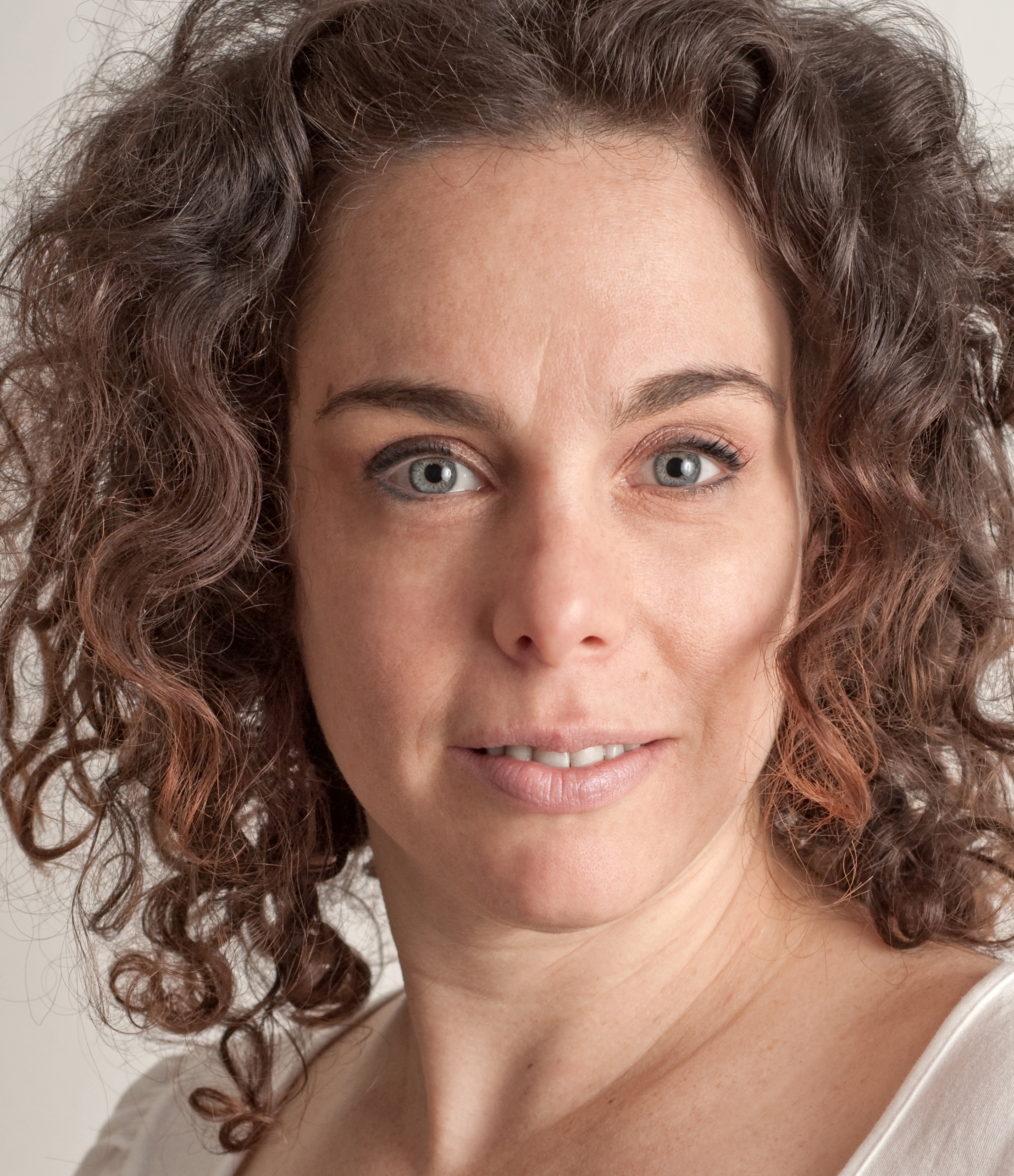
 Lecturer, Department of Learning Disabilities
Phone: 04-8288131, 04-8288131, Extension: 8131
Email: orlyr@construct.haifa.ac.il
Research Interests: My aim is to understand the genetic, pharmacological and neuro- cognitive aspects of numerical concepts (numeracy) and mathematics, with the hope of developing efficient rehabilitation procedures for children and adults with mathematical learning disabilities. In order to achieve this, I work in the new emerging field of mind brain and education. I study normal development (children and adults) clinical populations (e.g., brain lesions, dyscalculia, dyslexia, ADHD), different aspects of cognitive functions (e.g., basic numerical processes, language, attention, working memory), and I utilize different neuro-cognitive methods (e.g., computer controlled tests and functional brain imaging).
Recent Publications
A. BOOKS
AUTHORED BOOK
Rubinsten, O. (2007). Developmental dyscalculia: Cognitive, neuropsychological, developmental and educational aspects. A textbook for the Israeli Open University. (Hebrew)
EDITED BOOK
Henik, A., Rubinsten, O., & Anaki, D. (Eds.). (2005). Word Norms in Hebrew. Ben-Gurion University of the Negev. (Hebrew)
CHAPTERS IN BOOKS
Henik, A., Rubinsten, O., Ashkenazi, S., & Mark-Zigdon, N. (in press). Typical and atypical development of numerical cognition. In J. Burack & J. Enns (Eds.), Cognitive neuroscience, development, and psychopathology. Oxford University Press.
Rubinsten, O., Anaki, D., Henik, A., Drori, S., Faran, Y. (2005). Free association norms in the Hebrew language. In A. Henik, O. Rubinsten, & D. Anaki, (Eds.). Word Norms in Hebrew. (pp. 17-34), Ben-Gurion University of the Negev. (Hebrew)
B. EDITED JOURNALS
Rubinsten, O., Liane, K., Henik, A. Typical and atypical of numerical cognition. Guest Editors for a special issue in Developmental Neuropsychology to appear in summer 2010.
C. ARTICLES IN REFEREED JOURNALS
Ashkenazi, S. Rubinsten, O. & Henik, A. (in press). Attention, automaticity and developmental dyscalculia. Neuropsychology.
Henik, A., Rubinsten, O., Ashkenazi, S., & Mark-Zigdon, N. (in press). Neurocognitive aspects of numerical processing and developmental dyscalculia. Literacy and Language.(Hebrew).
Rubinsten, O. (2009). Co-occurrence of developmental disorders: The case of Developmental Dyscalculia. Cognitive Development, 24, 362-370.
Rubinsten, O. (2009). Co-morbidity of Developmental Disorders of Mathematics Learning, Reading and Attention. Canadian Language and Literacy Network.
Rubinsten, O. & Henik, A. (2009). Developmental dyscalculia: Heterogeneity may not mean different mechanisms. Trends in Cognitive Science.13, 92-99.
Cohen Kadosh, R., Henik, A., & Rubinsten, O. (2008). Are Arabic and verbal numbers processed in different ways? Journal of Experimental Psychology: Learning, Memory, and Cognition, 34, 1377-1391.
Rubinsten, O. Bedard, A. C., & Tannock, R. (2008). Methylphenidate improves general but not core numerical abilities in ADHD children with co-morbid dyscalculia or mathematical difficulties. Open Journal of Psychology, 1, 11-17.
Cohen Kadosh, R., Henik, A., & Rubinsten, O. (2007). The effect of orientation on number word processing. Acta Psychologica, 124, 370-381.
Rubinsten, O., & Henik, A. (2006). Double dissociation of functions in developmental dyslexia and dyscalculia. Journal of Educational Psychology, 98, 854-867.
Rubinsten, O., & Henik, A. (2005). Automatic activation of internal magnitude: A study of developmental dyscalculia. Neuropsychology, 19, 641-648.
Cohen Kadosh, R., Henik, A., Rubinsten, O., Mohr, H., Dori, H., Van de Ven, V., Zorzi, M., Hendler, T., Goebel, R., & Linden, D. (2005). Are numbers special? The comparison systems of the human brain investigated by fMRI. Neuropsychologia, 43, 1238-1248.
Rubinsten, O., Henik, A., Berger, A., & Shahar-Shalev, S. (2002). The development of internal representations of magnitude and their association with Arabic numerals. Journal of Experimental Child Psychology, 81, 74-92.
Rubinsten, O., & Henik, A (2002). Is an ant larger than a lion? Acta Psychologica, 111, 141-154.
